Choose with the whole setup in view.
Needle advice changes with the machine, fabric, layers, thread, and the problem at the stitch. Work through the checks below. Needle Desk shows documented families and their limits; your machine manual still decides what fits.
Needle just broke or bent? Start here ↓
Describe the setup
Choose a symptom first. For thread breaks, bobbin-thread pickup, an intact top thread slipping out of the needle at seam start, needle breakage, contact, or a serger that will not form a chain, leave material and layer details blank to see the relevant check; other results need both. If skipped stitches come with a new or unusual sound, record it in the optional context.
Your result will appear here
Start with the exact system in the machine manual. Then use material guidance as a shortlist and test safely on a scrap.
Needle just broke or bent?
First aid from Singer and Brother instructions. Your machine manual’s steps come first.
- 1
Stop and switch the machine off
Take your foot off the pedal. Singer’s Heavy Duty 4423 manual says to turn the power off before removing or inserting a needle.
- 2
Find the broken piece
Look for the tip on the fabric, the needle plate, and around the bobbin area before you sew again.
- 3
Fit a new needle of the same system
Do not reuse a bent, blunt, or damaged needle. On the Singer 4423 the flat side faces the back and the needle is pushed up as far as it goes; check your manual’s diagram for your machine.
- 4
Check the usual causes
Singer lists a needle too small for the fabric thickness, pushing or pulling the fabric instead of letting the feed dogs move it, a damaged needle, wrong insertion, and the wrong presser foot.
- 5
Get service if it happens again
If needles keep breaking or the needle hits the plate or foot, stop. Brother’s guidance says unresolved needle contact needs service.
Sources: Singer needle guide · SINGER 4423 manual, pp. 53 and 57 · Brother: needle is breaking or bending · Brother: needle is hitting something. Checked October 20, 2026.
Pick up the question you came with.
These references are built around the specific confusions reported by home sewers: paired size numbers, thread labels, system codes, and symptoms with competing causes.
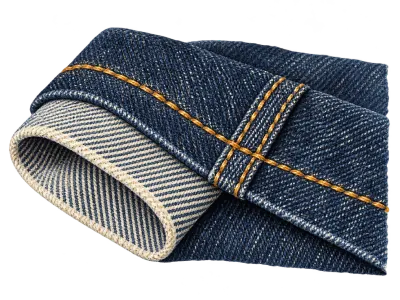
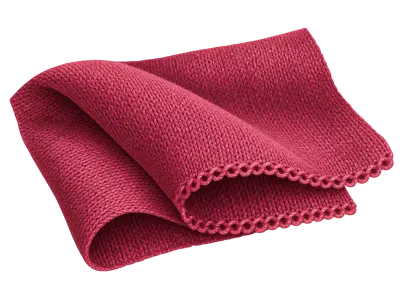
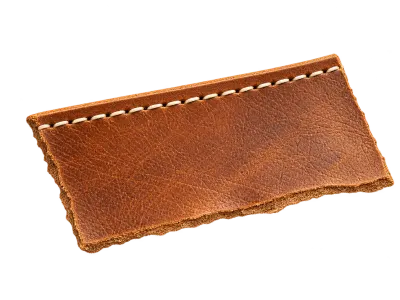
Start from the fabric on your table.
Machine pages: Singer Heavy Duty 4423 · Brother 1034D serger family · Brother PQ1500SL · Brother Innov-is F580 embroidery
Needle number ≠ thread size.
NM is the needle-size system, paired in common consumer charts with a Singer/US number. Thread labels use separate standards. A number printed on a thread spool cannot safely be converted to a needle size without knowing the thread system and a supported conversion source.
Understand the notation ↗Questions before the first stitch.
What sewing machine needle is best for denim?
SCHMETZ lists its Jeans needle, system 130/705 H-J, for denim, twill, canvas, tarpaulin, and oilskin. Its published sizes span NM 70/10 through NM 110/18. The machine manual still decides whether that system is suitable for your machine.
What needle should I use for stretch fabric?
SCHMETZ lists its Stretch needle, system 130/705 H-S, for elastic and highly elastic knits, including jersey and swimwear, in NM 65/9, 75/11, and 90/14. This is a documented family, not a personalized exact-size result.
Why are my stitches skipping?
A needle mismatch is one possibility, but threading, needle condition, fabric handling, and machine setup can also matter. Follow your machine's manual and the troubleshooting steps on our stitch-problem guide; stop if the needle hits the plate or foot.
My machine skips stitches and has started making a clicking sound. Is it the needle?
A new or unusual sound does not identify needle contact or a cause. Pause sewing while you check the exact machine manual. The finder preserves any exact-model source context but does not treat a needle-size change as a diagnosis. If you suspect a strike or the sound persists after manual-directed checks, stop and contact the machine maker or a qualified technician.
Does this finder know if a needle fits my machine model?
Only for a short list of exact models covered by manufacturer sources, including selected Brother sergers and quilting machines, BERNINA L 450 and L 890 QE, and JUKI TL-2010Q. This is not a comprehensive compatibility database. Exact market, manual wording, operation, and source limits remain visible in each result; check your own manual before sewing.
Facts linked to their source.
Product families and size ranges below are taken from SCHMETZ's household-needle references. Model-specific findings stay attached to the cited manufacturer page or manual. Community questions are qualitative context, not compatibility evidence. Sources reviewed October 20, 2026.
- SCHMETZ Jeans needle
- SCHMETZ Stretch needle
- SCHMETZ Leather needle
- SCHMETZ Universal needle
- SCHMETZ needle systems for overlock machines
- SCHMETZ needle anatomy and size table
- SCHMETZ Jersey needle
- SCHMETZ Microtex needle
- SCHMETZ Quilting needle
- SCHMETZ Embroidery needle
- SCHMETZ Topstitch needle
- SCHMETZ Metallic needle
- WAWAK Tex chart used as a tentative size comparison
- Brother 4234DT / 5234PRW serger needle reference
- Brother 1034D-family chain-off / needle reference
- Brother 1034D-family thread-break reference
- BERNINA L 450 / L 460 manual (2018)
- BERNINA L 890 QE manual (2023)
- JUKI TL-2010Q specifications · JUKI TL-2010Q manual
- Brother PQ1500SL / DZ1500SL manual
Reference prototype, not a substitute for the machine manual or a sewing practitioner. If the machine system is unknown, stop and verify it. If damage or needle strikes occur, stop the machine.